

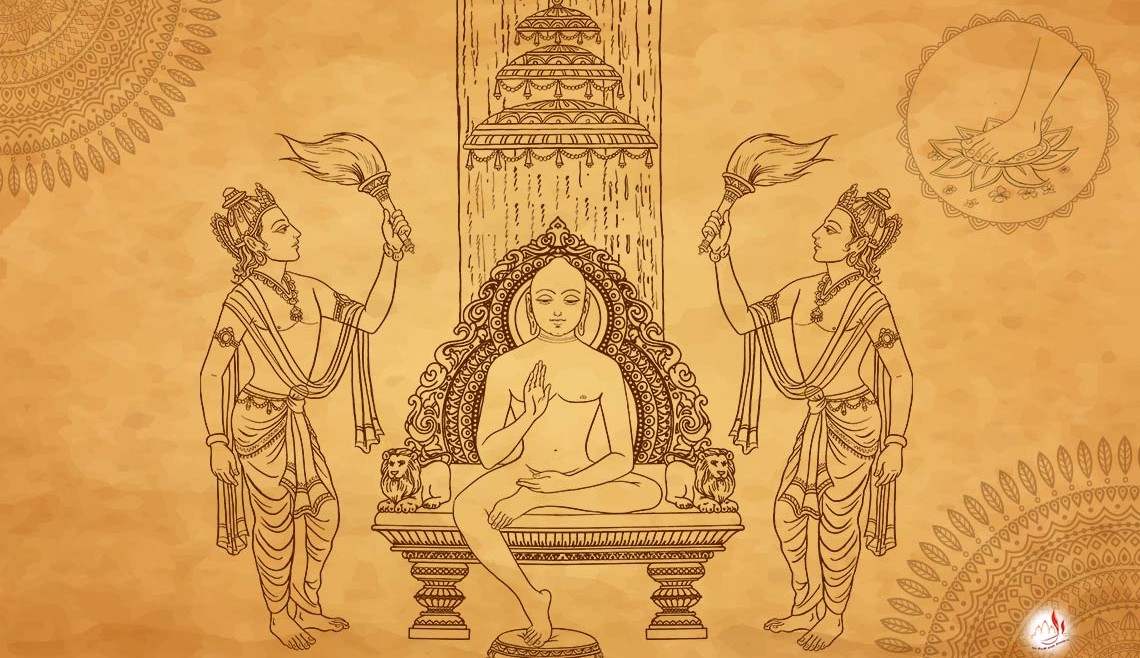
1. Utpaad Pūrva: Living (Jiv), non-living (Ajiv), and its modes (Paryäya)
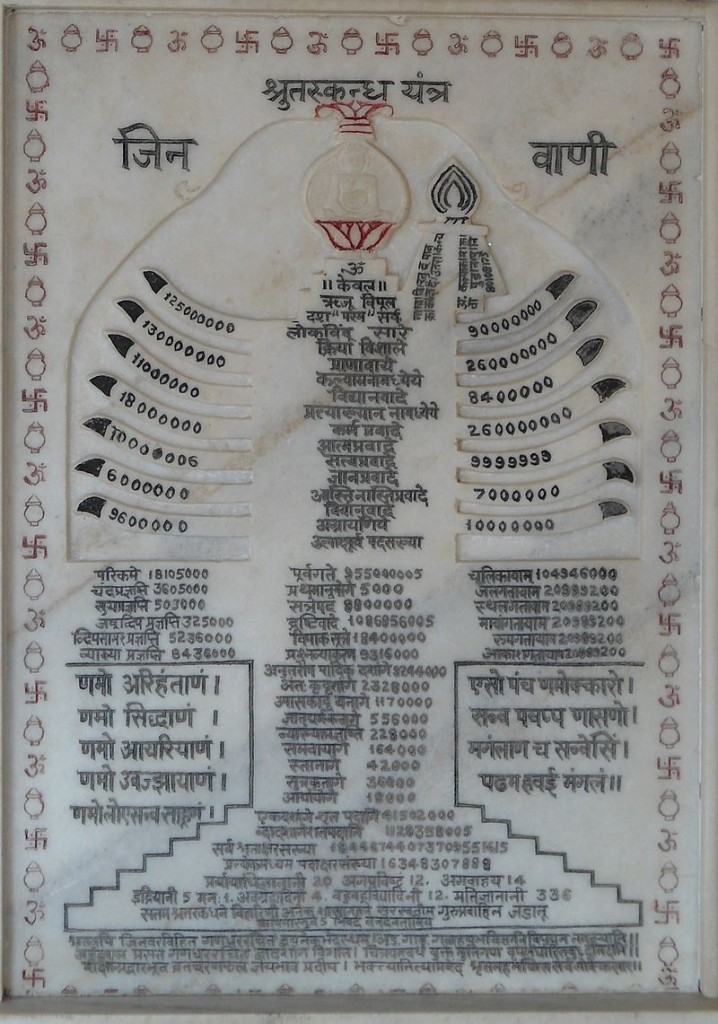
2.Agrayaniya Purva: Nine realities (Navtattva), six substances (Shad-dravya)
3.Viryapravada Purva: Relating to energy of soul, non-living
4. Asti Nasti Pravada Purva: Multiplicity of views (Anekāntvād), Saptabhangi
5. Jnana Prāvada Pūrva: Five types of knowledge and three types of ignorance
6. Satya Pravada Purva: Relating to truth, restraint, silence (Maun), speech
7. Atma pavada Purva: Analysis of soul from different view points (naya)
8. Karma Pravada Pūrva: Theory of karma, its bondage, influx, its nature, fruition, shedding
9. Pratyakhyana Purva: Giving up (Pachchhakhän), restraint, vows, detachment
10. Vidyā Pravāda Purva: Expertise (vidyä), exceptional abilities, practice
11. Kalyana Pravada Purva: Spiritual alertness (Apramäd) and laziness (Pramäd)
12. Prana Pravada Purva: Ten types of life substances or vitalities (Prän), life span
13. Kriyā Visala Purva: Skills, 64 arts of women, 84 arts of men
14. Lokbindus ā Purva: About universe
In Jainism, the 14 Pūrvas (Purvas) were ancient canonical teachings that contained very deep philosophical and spiritual knowledge. They were traditionally believed to be part of the Drstivada, the twelfth Anga. According to Jain tradition, these texts were memorized by early monks but were gradually lost over time due to decline in memorization and practice.
Each Pūrva dealt with a particular philosophical, ethical, cosmological, or practical topic. Below is a more detailed explanation of each of the 14 Pūrvas.
1. Utpāda Pūrva
This Pūrva explains the fundamental nature of existence.
Main topics:
- The distinction between living substances (Jīva) and non-living substances (Ajīva).
- The concept of modes (Paryāya), meaning the changing states of substances.
- The doctrine that substances are permanent in essence but changing in modes.
- Explanation of origination (utpāda), persistence (dhrauvya), and decay (vyaya) of reality.
Philosophical importance:
- It lays the foundation for Jain metaphysics by explaining how change occurs while the substance remains eternal.
2. Agrāyaṇīya Pūrva
This Pūrva deals with the core principles of Jain philosophy.
Main topics:
- Nav Tattva (Nine Realities):
- Jīva (soul)
- Ajīva (non-living)
- Āsrava (influx of karma)
- Bandha (bondage)
- Saṃvara (stoppage of karma)
- Nirjarā (shedding of karma)
- Moksha (liberation)
- Punya (merit)
- Papa (demerit)
- Six substances (Ṣaḍ-dravya):
-
- Jīva
- Pudgala (matter)
- Dharma (principle of motion)
- Adharma (principle of rest)
- Ākāśa (space)
- Kāla (time)
Purpose:
- Explains how reality is structured and how liberation is achieved.
3. Vīrya Pravāda Pūrva
This Pūrva discusses spiritual energy and power.
Main topics:
- Vīrya (energy or spiritual strength) of the soul.
- How spiritual energy is weakened by karmic bondage.
- Ways to increase inner strength through discipline and austerities.
- Interaction between soul and matter.
Purpose:
- Emphasizes self-effort in spiritual progress.
4. Asti-Nāsti Pravāda Pūrva
This Pūrva explains the doctrine of multiple viewpoints.
Main topics:
- Anekantavada – reality has many aspects.
- Syadvada and Saptabhaṅgī (sevenfold predication).
- How statements can be true in some contexts and false in others.
- Logic used to reconcile apparently contradictory views.
Importance:
- Promotes intellectual tolerance and balanced reasoning.
5. Jñāna Pravāda Pūrva
This Pūrva focuses on knowledge and cognition.
Main topics:
- Five types of knowledge:
- Mati Jñāna – sensory knowledge
- Śruta Jñāna – scriptural knowledge
- Avadhi Jñāna – clairvoyant knowledge
- Manaḥparyāya Jñāna – telepathic knowledge
- Kevala Jñāna – omniscience
- Three types of ignorance that obstruct knowledge.
- Relationship between knowledge and liberation.
Purpose:
- Shows that perfect knowledge leads to spiritual freedom.
6. Satya Pravāda Pūrva
This Pūrva examines truth and ethical speech.
Main topics:
- The meaning of truth (Satya).
- The discipline of controlled speech.
- Importance of silence (Mauna) in spiritual practice.
- Ethical communication and avoidance of harmful speech.
Importance:
- Connects speech ethics with spiritual purity.
7. Ātma Pravāda Pūrva
This Pūrva analyzes the nature of the soul.
Main topics:
- Characteristics of Ātman (soul).
- Various philosophical viewpoints (Naya) for understanding reality.
- Differences between pure soul and soul influenced by karma.
- Spiritual self-analysis.
Purpose:
- Helps practitioners understand their true nature.
8. Karma Pravāda Pūrva
This Pūrva presents the Jain theory of karma.
Main topics:
- Nature of karmic particles.
- Āsrava (influx of karma).
- Bandha (bondage of karma).
- Saṃvara (stopping karmic influx).
- Nirjarā (shedding karmas).
- Fruition of karmas and their consequences.
Importance:
- Provides the complete mechanism of karmic bondage and liberation.
9. Pratyākhyāna Pūrva
This Pūrva discusses renunciation and vows.
Main topics:
- Pratyākhyāna (renunciation or giving up).
- Ethical restraints and vows (vratas).
- Detachment from worldly objects.
- Gradual spiritual discipline.
Purpose:
- Guides monks and laypersons in ethical self-control.
10. Vidyā Pravāda Pūrva
This Pūrva deals with knowledge systems and special abilities.
Main topics:
- Vidyās (special forms of knowledge or skills).
- Mystical and intellectual powers developed through discipline.
- Study, practice, and mastery of different sciences.
Purpose:
- Shows the connection between knowledge, discipline, and capability.
11. Kalyāṇa Pravāda Pūrva
This Pūrva discusses spiritual vigilance.
Main topics:
- Apramāda (alertness or mindfulness).
- Pramāda (carelessness or laziness).
- How negligence leads to spiritual downfall.
- Constant awareness in conduct and meditation.
Importance:
- Encourages continuous mindfulness in spiritual life.
12. Prāṇa Pravāda Pūrva
This Pūrva focuses on vitalities of living beings.
Main topics:
- Ten Prāṇas (vital forces) such as:
- sense organs
- respiration
- body strength
- lifespan
- Classification of living beings based on life forces.
- Protection of life as a basis of non-violence (Ahimsa).
Purpose:
- Explains the biological and ethical dimensions of life.
13. Kriyā Viśāla Pūrva
This Pūrva deals with skills and arts.
Main topics:
- 64 arts traditionally associated with women.
- 84 arts associated with men.
- Social skills, crafts, sciences, and cultural knowledge.
Purpose:
- Shows that Jain knowledge included practical and cultural education, not only spirituality.
14. Lokabindu Pūrva
This Pūrva explains cosmology and the universe.
Main topics:
- Structure of the Jain universe (Loka).
- The three regions:
- Upper world (heavens)
- Middle world (human realm)
- Lower world (hells)
- Size, shape, and boundaries of the cosmos.
- Cycles of time and existence.
Importance:
- Provides the cosmological framework of Jain philosophy.
The 14 Pūrvas covered nearly every branch of knowledge:
- Metaphysics
- Logic and epistemology
- Ethics and vows
- Karma theory
- Cosmology
- Spiritual practice
- Practical arts and sciences
Together they represented the most advanced philosophical teachings of early Jain tradition.