

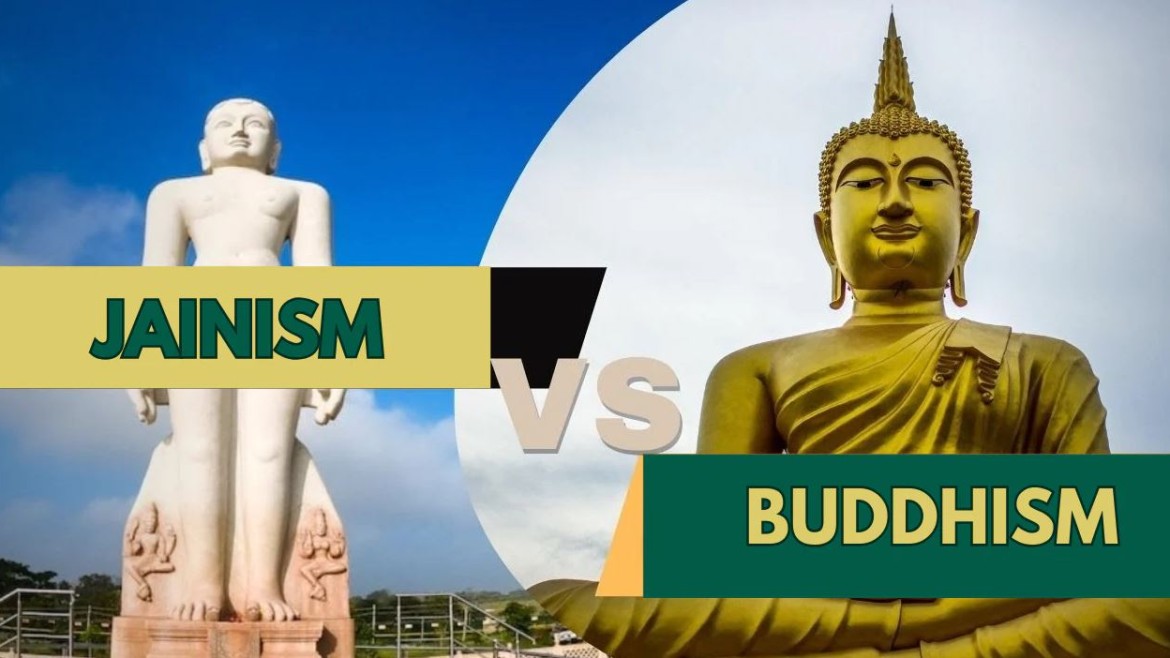
મૂળ અને ઐતિહાસિક પાયો
જૈન ધર્મ:
જૈન ધર્મ બૌદ્ધ ધર્મ કરતાં ઘણો જૂનો માનવામાં આવે છે, જેના મૂળ વૈદિક કાળ પહેલાના છે.
૨૪ મા તીર્થંકર ભગવાન મહાવીર (૫૯૯-૫૨૭ બીસીઇ) દ્વારા આ ધર્મનું પુનર્જીવન થયું .
જોકે, જૈનો માને છે કે જૈન ધર્મના ઉપદેશો અનાદિ કાળથી અસ્તિત્વમાં છે, અને મહાવીર ફક્ત એક સુધારક હતા, સ્થાપક નહીં.
બૌદ્ધ ધર્મ:
સિદ્ધાર્થ ગૌતમ (૫૬૩-૪૮૩ બીસીઇ) દ્વારા સ્થાપના , જે બુદ્ધ તરીકે ઓળખાય છે .
લુમ્બિની (હાલના નેપાળ) માં જન્મેલા, તેમણે બોધગયામાં બોધિ વૃક્ષ નીચે જ્ઞાન પ્રાપ્ત કર્યું.
બૌદ્ધ ધર્મ ધાર્મિક વૈદિક ધર્મ અને સામાજિક અસમાનતાઓ સામે સુધારા ચળવળ તરીકે ઉભરી આવ્યો.
મુખ્ય તત્વજ્ઞાન અને માન્યતાઓ
જ્યારે તેમની મૂળ માન્યતાઓની વાત આવે છે, ત્યારે જૈન ધર્મ અને બૌદ્ધ ધર્મ એક જ સાંસ્કૃતિક વાતાવરણમાં ઉદ્ભવ્યા હોવા છતાં, તેઓ અલગ અલગ દાર્શનિક માર્ગો અપનાવે છે .
જૈન ધર્મ એક શાશ્વત આત્માના અસ્તિત્વમાં દૃઢપણે માને છે, જેને જીવ તરીકે ઓળખવામાં આવે છે . દરેક જીવમાં આ આત્મા હોય છે, અને અંતિમ ધ્યેય તેને કડક શિસ્ત અને અહિંસા દ્વારા જન્મ અને મૃત્યુના ચક્રમાંથી મુક્ત કરવાનો છે. જૈન ધર્મમાં મુક્તિ (મોક્ષ) તીવ્ર આત્મ-નિયંત્રણ, તપસ્વી પ્રથાઓ અને નૈતિક જીવન દ્વારા પ્રાપ્ત થાય છે.
તેનાથી વિપરીત, બૌદ્ધ ધર્મ અનત્તના સિદ્ધાંતને અનુસરે છે , જેનો અર્થ થાય છે કાયમી આત્મા અથવા સ્વનો ઇનકાર. બુદ્ધના મતે, સ્થિર આત્માના વિચારને વળગી રહેવાથી દુઃખ થાય છે. બૌદ્ધ ધર્મમાં અંતિમ ધ્યેય નિર્વાણ પ્રાપ્ત કરવાનો છે, જે દુઃખ અને પુનર્જન્મના ચક્રમાંથી મુક્તિ છે , જે અષ્ટાંગ માર્ગના અભ્યાસ દ્વારા પ્રાપ્ત થાય છે .
બંને ધર્મો સર્જક ભગવાનની વિભાવનાને નકારે છે . કર્મની બાબતમાં , જૈન ધર્મ ખૂબ કડક વલણ અપનાવે છે. દરેક વિચાર, શબ્દ અને ક્રિયા કર્મને સીધા આત્મા સાથે જોડે છે, જે તેની શુદ્ધતા અને પ્રગતિને અસર કરે છે. બીજી બાજુ, બૌદ્ધ ધર્મ કર્મને કારણ-અને-અસર સિદ્ધાંત તરીકે વધુ જુએ છે, જ્યાં વ્યક્તિની ક્રિયાઓ ભવિષ્યના અનુભવોને પ્રભાવિત કરે છે. ધ્યાન અને સભાન જીવનને આ કર્મ ચક્રમાંથી મુક્ત થવાના સાધનો તરીકે જોવામાં આવે છે.
પ્રથાઓ અને મુક્તિનો માર્ગ
જૈન ધર્મ:
પાંચ વ્રતઃ અહિંસા (અહિંસા), સત્ય, અસ્તેય, બ્રહ્મચર્ય, અપરિગ્રહ.
કડક તપસ્વી જીવનશૈલી.
આત્મ-નિંદા અને તપશ્ચર્યા પર ભાર.
શાકાહાર ફરજિયાત છે.
બૌદ્ધ ધર્મ:
આઠગણી માર્ગ : સાચો દૃષ્ટિકોણ, હેતુ, વાણી, ક્રિયા, આજીવિકા, પ્રયાસ, ધ્યાન, એકાગ્રતા.
મધ્યમ માર્ગ – ન તો ભોગવિલાસ કે ન તો આત્યંતિક સંન્યાસ.
ધ્યાન અને માઇન્ડફુલનેસ મુખ્ય ભૂમિકા ભજવે છે.
શાકાહાર વૈકલ્પિક છે.
ઐતિહાસિક ફેલાવો અને અસર
જૈન ધર્મ:
મોટે ભાગે ભારતમાં કેન્દ્રિત રહ્યા .
ચંદ્રગુપ્ત મૌર્ય (જે જૈન સાધુ બન્યા) જેવા રાજાઓ દ્વારા આશ્રય મેળવ્યો.
પાલીતાણા, શ્રવણબેલગોલા, રાણકપુર જેવા મહાન મંદિરો બનાવ્યા.
બૌદ્ધ ધર્મ:
એશિયામાં ફેલાયેલું – શ્રીલંકા, ચીન, જાપાન, થાઇલેન્ડ, તિબેટ.
બૌદ્ધ ધર્મના વૈશ્વિકરણમાં મુખ્ય ભૂમિકા ભજવનાર સમ્રાટ અશોક દ્વારા આશ્રય મેળવ્યો.
સ્તૂપ, વિહાર બનાવ્યા અને મિશનરીઓને વિદેશ મોકલ્યા
ફિલોસોફી જીવવી ખાવાની આદતો
જૈન ધર્મ:
અત્યંત કડક શાકાહાર – સામાન્ય શાકાહારી આહાર કરતાં પણ વધુ કડક.
ડુંગળી, લસણ, બટાકા, ગાજર જેવા મૂળ શાકભાજી ન ખાવા – કારણ કે છોડને ઉખેડી નાખવાથી આખા જીવનો નાશ થાય છે અને જમીનમાં રહેલા સુક્ષ્મસજીવોને ખલેલ પહોંચે છે.
આથોવાળા ખોરાક (યીસ્ટ, આલ્કોહોલ, વગેરે) થી દૂર રહેવું.
ઘણા જૈનો સૂર્યાસ્ત પહેલાં ખાવામાં આવતા સાત્વિક ભોજનનું પાલન કરે છે.
ઉન્નત આધ્યાત્મિક અભ્યાસમાં ઉપવાસ (ઉપવાસ) અને સાલેખાના (મરણ સુધી સ્વૈચ્છિક ઉપવાસ) નો અભ્યાસ.
બૌદ્ધ ધર્મ:
થરવાડા બૌદ્ધો (ખાસ કરીને સાધુઓ) પરંપરાગત રીતે ભિક્ષા ખોરાક સ્વીકારે છે, ભલે તેમાં માંસનો સમાવેશ થતો હોય, જ્યાં સુધી પ્રાણીને ખાસ તેમના માટે મારવામાં ન આવ્યો હોય.
મહાયાન અને વજ્રયાન બૌદ્ધો ઘણીવાર શાકાહાર પસંદ કરે છે, પરંતુ તે સાર્વત્રિક રીતે ફરજિયાત નથી.
ધ્યાનપૂર્વક ખાવા અને સંયમિત ખાવા પર ભાર મૂકવામાં આવે છે.
ઉપવાસ ક્યારેક ક્યારેક કરવામાં આવે છે, મોટે ભાગે ઉપોસથના દિવસોમાં.
મુસાફરી, સંપત્તિ અને સંપત્તિ
જૈન ધર્મ:
સાધુઓ અને સાધ્વીઓ એક જગ્યાએ કાયમી રહેતા નથી , તેઓ ખુલ્લા પગે મુસાફરી કરે છે (વરસાદની ઋતુ સિવાય – ચાતુર્માસ).
બધી સંપત્તિનો ત્યાગ કરો; વાટકી કે સાવરણી પણ જરૂરિયાત તરીકે જોવામાં આવે છે, વૈભવી તરીકે નહીં.
સામાન્ય અનુયાયીઓને નૈતિક રીતે કમાણી કરવા અને ધાર્મિક અને સામાજિક કાર્યો માટે ઉદારતાથી દાન કરવા પ્રોત્સાહિત કરવામાં આવે છે.
બૌદ્ધ ધર્મ:
સાધુઓ અને સાધ્વીઓ પણ ભટકતી જીવનશૈલી જીવી શકે છે , પરંતુ કેટલાક કાયમી ધોરણે મઠોમાં રહે છે.
થોડી સંપત્તિ – ભિક્ષાનો વાટકો, ઝભ્ભો, સોય, પટ્ટો, પાણી ગાળનાર .
ભૌતિક સંપત્તિથી દૂર રહેવા અને સમુદાય કલ્યાણ માટે સંસાધનોનો ઉપયોગ કરવા પર ભાર .
Jainism
- Jainism founded by Rishabhadeva, with the emblem of a bull.
- It has 24 tirthankaras (great teachers), with Parshvanatha as the 23rd and Vardhamana Mahavira as the 24th.
- Mahavira, the 24th tirthankara, was born in 540 BC in Kundagram near Vaishali.
- Mahavira’s father was Siddhartha of the Jnatrik Kshatriya Clan, and his mother was Trishala, sister of Lichchhavi Chief Chetaka.
- He was married to Yashoda and had a daughter named Priyadarshini, whose husband Jamali became his first disciple.
- Mahavira became an ascetic at the age of 30 and attained Kaivalya (Jina) at the age of 42 outside the town of Jimbhikgrama.
- He passed away at the age of 72 in 468 BC in Pavapuri.
- The Five Doctrines of Jainism are: Ahimsa (non-violence), Asteya (non-stealing), Aparigraha (non-acquisition of property), Satya (truthfulness), and Brahmacharya (chastity).
- The Triratnas of Jainism are right knowledge, right faith, and right conduct.
- Jainism teaches that salvation is possible through the abandonment of possessions, fasting, self-mortification, study, and meditation.
- Jainism recognizes the existence of God but places the Jina higher in importance. It does not condemn the varna system.
- Jainism admitted both men and women, and its monastic establishments were called basadis.
- Patrons of Jainism include Kharavela, the king of Kalinga, and Chandragupta Maurya, who became the disciple of Bhadrabahu and spread Jainism in the South.
- During Chandragupta Maurya’s reign, Jainism split into two sects due to a famine in Magadha: Svetambaras (those who wear white dresses) under Sthulbhadra and Digambaras (naked ascetics) under Bhadrabahu.
- Jaina texts were written in the Prakrit language.
Councils
- The First Council of Jainism was held in 300 BC at Pataliputra under the leadership of Sthulbhadra. During this council, the Jaina Canons were compiled.
- The Second Council of Jainism took place in the 5th century AD at Vallabhi and was presided over by Kshamasramana. During this council, 12 Angas and 12 Upangas were compiled in the Ardh Magadhi language.
Buddhism
- Buddhism was founded by Gautama Buddha, also known as Siddhartha, Sakyamuni, or Tathagata.
- Gautama Buddha was born in 563 BC in Lumbini, Nepal, into the Shakya Kshatriya Clan.
- His father was Suddhodana, a Shakya ruler, and his mother was Mahamaya of the Kosalan dynasty, who died early. He was brought up by his stepmother Gautami.
- Gautama Buddha was married to Yashodhara, and they had a son named Rahul.
- The Triratnas in Buddhism represent the three pillars of the faith: Buddha (its founder), Dhamma (his teachings), and Sangha (the order of Buddhist monks and nuns).
- Buddhism is divided into two main sects: Hinayana and Mahayana.
Phases of Buddha’s Life and Symbols
Birth: Lotus and Bull
Mahabhinishkraman (Renunciation): Horse
Nirvana (Enlightenment): Bodhi Tree
Dharmachakra Pravartana (First Sermon): Wheel
Mahaparinirvana (Death): Stupa
The Dhamma
The Four Great Truths
- The world is full of sorrow and misery.
- The cause of all pain and misery is desire.
- Pain and misery can be ended by killing or controlling desire.
- Desire can be controlled by following the Eight-Fold Path.
The Eight-Fold Path
- Right Understanding
- Right Thought
- Right Action
- Right Livelihood
- Right Efforts
- Right Speech
- Right Mindfulness
- Right Concentration
Madhya Marga (The Middle Path)
- It teaches that individuals should avoid both extremes: a life of excessive comforts and luxury on one hand, and a life of severe asceticism and deprivation on the other.
- The Middle Path suggests finding a balanced and moderate way of life that avoids indulgence and self-mortification, aiming for a state of equilibrium and spiritual growth.
Buddhist Literature
- In Pali language, it is commonly referred to as Tripitakas, which means ‘three-fold basket.’
- Vinaya Pitaka: Contains rules of discipline in Buddhist monasteries.
- Sutta Pitaka: Contains a collection of Buddha’s sermons and teachings, and it is the largest among all three pitakas.
- Abhidhamma Pitaka: Provides an explanation of the philosophical principles of the Buddhist religion.
- Other important Buddhist texts of Sri Lanka include Mahavamsha and Dipavamsa.
Causes of Decline of Buddhism
- Use of Sanskrit: The shift from Pali, the language of the common people, to Sanskrit, the language of intellectuals, may have contributed to the decline.
- Revival of Hinduism: The resurgence of Hinduism as a dominant religious and cultural force in India posed a challenge to Buddhism and led to its decline.
Buddhist Councils
- First Council (483 BC)
- Period: 483 BC
- Place: Rajagriha
- Chairman: Mahakashyapa
- Patron: Ajatashatru
- Second Council (383 BC)
- Period: 383 BC
- Place: Vaishali
- Chairman: Sabakami
- Patron: Kalashoka
- Third Council (250 BC)
- Period: 250 BC
- Place: Patliputra
- Chairman: Mogaliputta Tissa
- Patron: Ashoka
- Fourth Council (AD 72)
- Period: AD 72
- Place: Kundalvana
- Chairman: Vasumitra, Ashwaghosa
- Patron: Kanishka
બૌદ્ધ ધર્મ
બૌદ્ધ ધર્મની સ્થાપના ગૌતમ બુદ્ધે કરી હતી, જેમને સિદ્ધાર્થ, શાક્યમુનિ અથવા તથાગત તરીકે પણ ઓળખવામાં આવે છે।
ગૌતમ બુદ્ધનો જન્મ ઈ.સ. પૂર્વે 563 માં નેપાળના લુંબીનીમાં શાક્ય ક્ષત્રિય કુળમાં થયો હતો।
તેમના પિતા શુદ્ધોધન શાક્ય વંશના શાસક હતા અને માતા કોશલ વંશની મહામાયા હતા, જેમનું વહેલી વયે અવસાન થયું હતું। ત્યારબાદ તેમનો ઉછેર સાવકી માતા ગૌતમીએ કર્યો હતો।
ગૌતમ બુદ્ધનું લગ્ન યશોધરા સાથે થયું હતું અને તેમને રાહુલ નામનો પુત્ર હતો।
બૌદ્ધ ધર્મના ત્રિરત્નો ધર્મના ત્રણ આધારસ્તંભોને દર્શાવે છે:
બુદ્ધ (સ્થાપક), ધમ્મ (તેમના ઉપદેશો) અને સંઘ (બૌદ્ધ ભિક્ષુ અને ભિક્ષુણીઓનો સંઘ)।
બૌદ્ધ ધર્મના બે મુખ્ય સંપ્રદાયો છે: હીનયાન અને મહાયાન।
બુદ્ધના જીવનના તબક્કાઓ અને તેમના પ્રતીકો
જન્મ: કમળ અને બળદ
મહાભિનિષ્ક્રમણ (ત્યાગ): ઘોડો
નિવાણ (જ્ઞાન પ્રાપ્તિ): બોધિ વૃક્ષ
ધર્મચક્ર પ્રવર્તન (પ્રથમ ઉપદેશ): ચક્ર
મહાપરિનિર્વાણ (મૃત્યુ): સ્તૂપ
ધમ્મ
ચાર આર્ય સત્ય
-
વિશ્વ દુઃખ અને પીડાથી ભરેલું છે।
-
તમામ દુઃખ અને પીડાનું કારણ ઇચ્છા છે।
-
ઇચ્છાને નષ્ટ કરીને અથવા નિયંત્રિત કરીને દુઃખનો અંત આવી શકે છે।
-
અષ્ટાંગિક માર્ગનું પાલન કરીને ઇચ્છાને નિયંત્રિત કરી શકાય છે।
અષ્ટાંગિક માર્ગ
-
સમ્યક દૃષ્ટિ
-
સમ્યક સંકલ્પ
-
સમ્યક કર્મ
-
સમ્યક આજીવિકા
-
સમ્યક પ્રયત્ન
-
સમ્યક વાણી
-
સમ્યક સ્મૃતિ
-
સમ્યક સમાધિ
મધ્ય માર્ગ (મધ્યમ માર્ગ)
આ માર્ગ શીખવે છે કે માનવોએ બે અતિશયતાઓથી દૂર રહેવું જોઈએ:
એક તરફ અતિશય સુખસગવડ અને વૈભવભર્યું જીવન અને બીજી તરફ અતિશય તપસ્યા તથા વંચિત જીવન।
મધ્ય માર્ગ સંતુલિત અને મધ્યમ જીવન જીવવાનો સંદેશ આપે છે, જે ભોગવિલાસ અને આત્મપીડાથી દૂર રહી આધ્યાત્મિક વિકાસ તરફ દોરી જાય છે।
બૌદ્ધ સાહિત્ય
પાલી ભાષામાં બૌદ્ધ ગ્રંથોને સામાન્ય રીતે ત્રિપિટક કહેવામાં આવે છે, જેનો અર્થ ‘ત્રણ ટોપલાં’ થાય છે।
-
વિનય પિટક: બૌદ્ધ વિહારના શિસ્ત નિયમોનો સમાવેશ કરે છે।
-
સુત્ત પિટક: બુદ્ધના ઉપદેશો અને પ્રવચનોનો સંગ્રહ છે અને તે ત્રણેય પિટકોમાં સૌથી મોટું છે।
-
અભિધમ્મ પિટક: બૌદ્ધ ધર્મના તત્ત્વજ્ઞાનિક સિદ્ધાંતોની વ્યાખ્યા કરે છે।
શ્રીલંકાના અન્ય મહત્વપૂર્ણ બૌદ્ધ ગ્રંથોમાં મહાવંશ અને દીપવંશનો સમાવેશ થાય છે।
બૌદ્ધ ધર્મના પતનના કારણો
-
સંસ્કૃતનો ઉપયોગ: સામાન્ય લોકોની ભાષા પાલી છોડીને વિદ્વાનોની ભાષા સંસ્કૃત અપનાવવાથી બૌદ્ધ ધર્મનો પ્રભાવ ઘટ્યો।
-
હિંદુ ધર્મનું પુનર્જાગરણ: ભારતમાં હિંદુ ધર્મના પુનરોત્થાનથી બૌદ્ધ ધર્મને પડકાર મળ્યો અને તેનું પતન થયું।
બૌદ્ધ પરિષદો
પ્રથમ બૌદ્ધ પરિષદ (ઈ.સ. પૂર્વે 483)
-
સ્થળ: રાજગૃહ
-
અધ્યક્ષ: મહાકાશ્યપ
-
આશ્રયદાતા: અજાતશત્રુ
દ્વિતીય બૌદ્ધ પરિષદ (ઈ.સ. પૂર્વે 383)
-
સ્થળ: વૈશાલી
-
અધ્યક્ષ: સબકામી
-
આશ્રયદાતા: કાલાશોક
ત્રીજી બૌદ્ધ પરિષદ (ઈ.સ. પૂર્વે 250)
-
સ્થળ: પાટલિપુત્ર
-
અધ્યક્ષ: મોગલિપુત્ત તિસ્સ
-
આશ્રયદાતા: અશોક
ચોથી બૌદ્ધ પરિષદ (ઈ.સ. 72)
-
સ્થળ: કુંડલવન
-
અધ્યક્ષ: વસુમિત્ર, અશ્વઘોષ
-
આશ્રયદાતા: કનિષ્ક